I currently own 3 Leica bodies and 3 lenses, and found them naturally falling into 3 distinctively separate combos for different use cases. I have a hunch that I would stuck with these 3 combos for as long as I could imagine, just like I stucked with M9+Noctilux for more than 10 years.
This article narrates the journey how I got to this point.
It all started with the 1st Covid lockdown
For a very long time I was 1-body-1-lens: body being M9, lens being Noctilux 50mm f/0.95 ASPH.
While most found Noctilux too heavy and bulky to be the main lens, I was using it so predominantly that a photographer friend gushed that I “might be the only human being on earth who uses Noctilux as the main lens, except maybe Thorsten Overgaard.”
During the 1st Covid lockdown in spring 2020, confined in my 35m^2 apartment in Saint-Germain-des-Prés, I started yearning for other things in my Leica world than my faithful combo of M9+Noctilux. I eventually bought a used Summilux 28mm f/1.4 ASPH on eBay from an Italian reseller in the summer of 2020.
Having briefly owned a Q2 in the summer of 2019, Summilux 28mm on M9 immediately confirmed my doubt about the irremovable lens that carried the same name on Q2. The Q2 lens was too clinically perfect, photos came out too digital, that I sold it immediately after my 2019 summer vacations in Puglia. Summilux 28mm f/1.4 ASPH, on the other hand, is analog and lively. It’s optically excellent but opposite to being clinical. I was also amazed at how 3D the look it produced despite it’s wide-angle focal length.
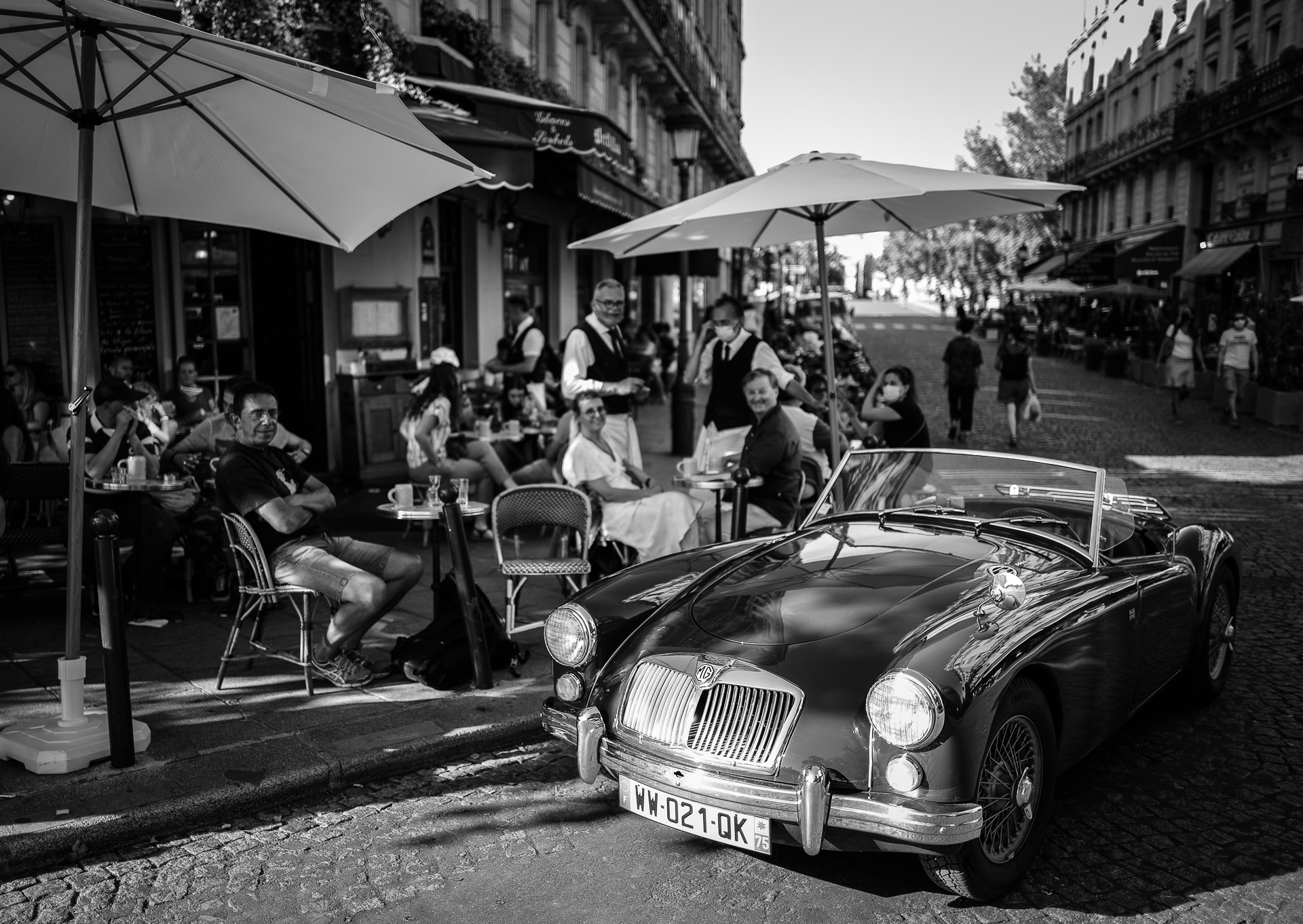
Who knew that the 2nd lockdown would be worse!
Then the 2nd lockdown hit Paris in November 2020. Looking back most of us would agree that this one was much longer and darker than the 1st one. First there was the length — from November 2020 all the way to May 2021. Even though this time markets remained open and we could work out outside without the stupid 1km limit, the length was just unbearable. It did not help at all that it started in the winter.
By the end of this long lockdown, after having watched billions of hours of Netflix, Prime and Youtube videos, I was longing for things a lot more analog, things that were slower and took more thoughts. The natural conclusion was: I need to go back to film!
So coming out of the lockdown I went straight to Leica Store Rive Gauche on rue du Cherche-Midi, which had just opened, and acquired the only copy of silver Leica M-A available at the time in the entire France.
Summilux 28mm immediately shined on my sliver M-A. Not only they look gorgeous together, the photos taken with Portra (both 160 and 400) were just addictive! Having given up (mistakenly, more on that later) on colors on my M9 after they swapped the CCD sensor in Tokyo in December 2018, for the first time in the long time I enjoyed colors again.
Film colors are so natural and pleasing that they require hardly any post-processing at all! After also trying Noctilux on M-A a bit, I quickly settled down to having Summilux 28mm ASPH permanently on M-A. And they have brought me great joy not just in Paris, but also during my vacations in Nice and Capri, as well as my grand return to Japan (after almost 2.5 yrs!) this past May.
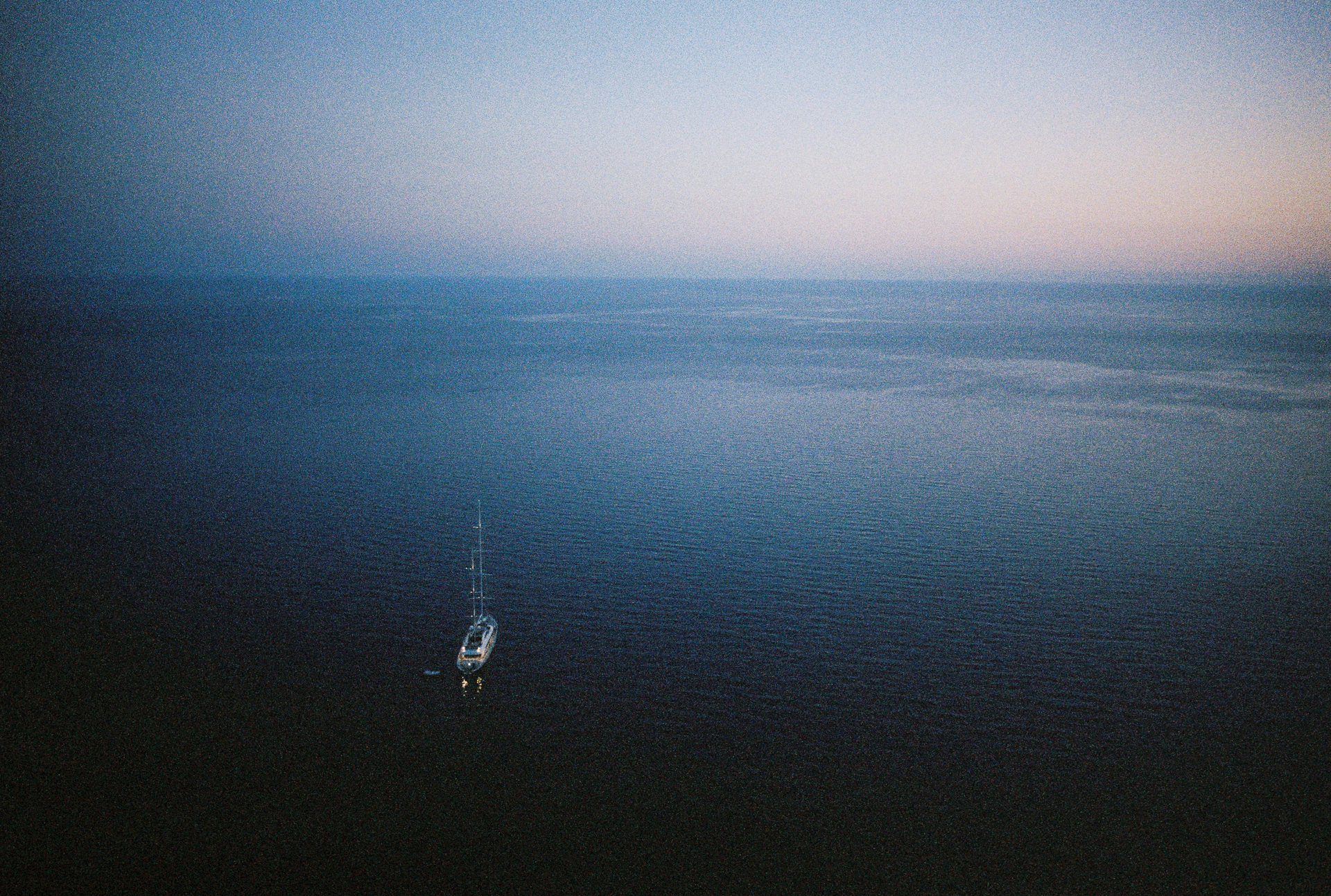
So at this point my long célibataire Leica life evolved into 2-body-2-lenses: M9+Noctilux and M-A+Summilux. I thought that’d be the end of it, at least for now.
A new digital-M in 11 years?
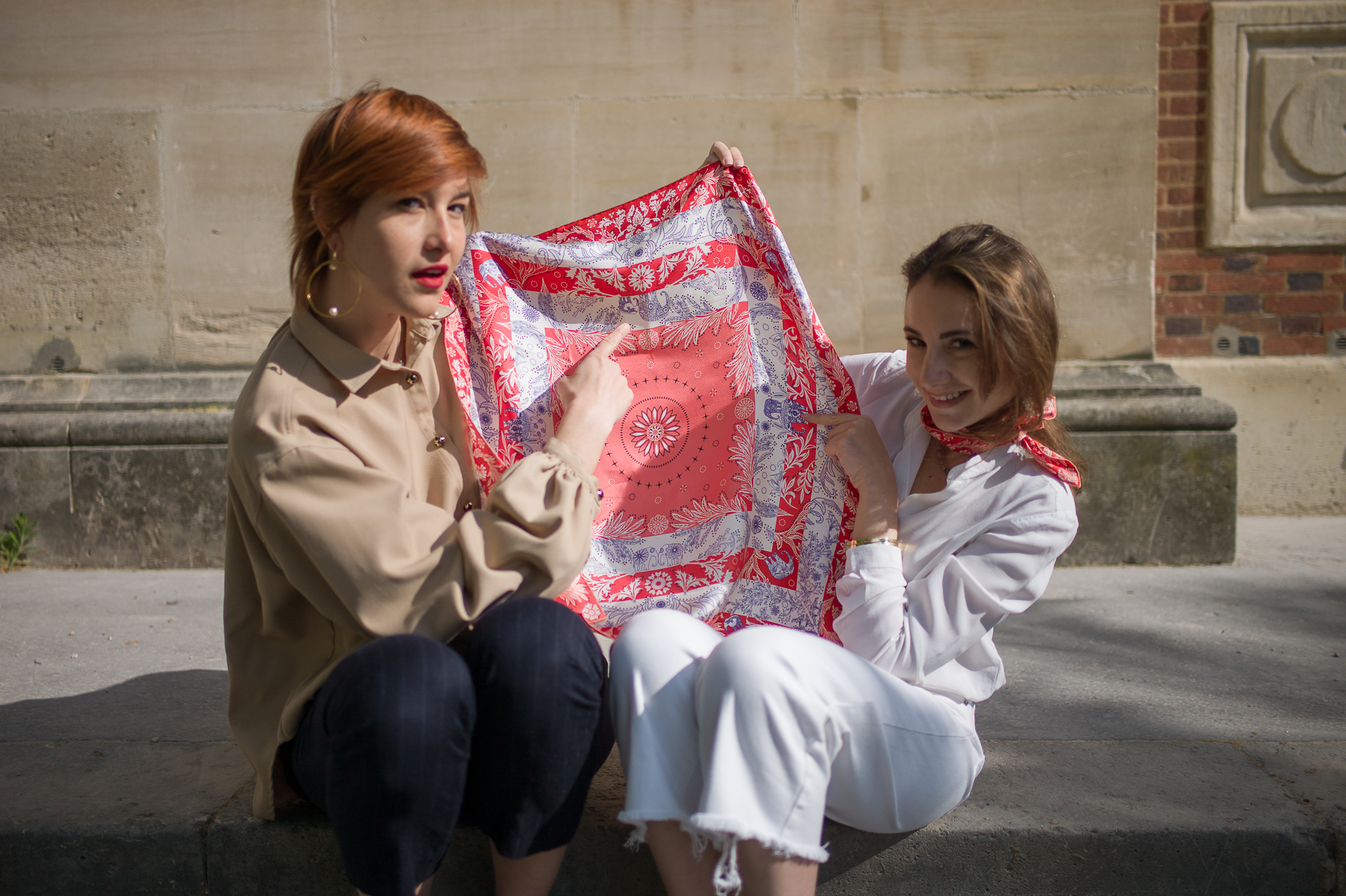
Then between May and June 2022, I shot some fashion works for a designer friend in Paris who designed and sold gorgeous scarfs. For practical purpose I used M9 instead of M-A. The small buffer and the slow write speed that had seldom be an issue for my street works gave me huge headaches during these shootings. Also since these were by default color works — who buy scarfs based on black-and-white photos? — I had to spend lots of time in correcting the “faulty” color of my M9 on Lightroom. (Again, more on this afterward)
The fact that I enjoyed these shootings and expected to do more in the future, I started wondering whether it’s finally time for me to acquire a new digital body. I had zero intention to sell my M9 as its B&W JPGs are legendary when combined with Noctilux. I envisioned keeping M9+Noctilux for my street works. But I did feel that I needed a reliable digital body for my other digital works.
Obviously at the time the talk of the town was the 60MP Leica M11, which was announced in January. But ever since its launch I was never really intrigued by it for a very simple reason — it removed my beloved bottom plate! I had owned a Q2 as I said and I didn’t like it. Using the same battery mechanism of Q2 inspired no more interest in me.
Though the electronic shutter looked attractive on paper — finally no need for ND filters on Noctilux and Summilux? — then Thorsten pointed out in his (very useful) video review that since the shutter had to open to allow for metering, then close before opening again to take the photos eventually if on mechanical shutter, there is this double shutter movements with inconsistent lag between them that sometimes threw him off during the shot. Knowing Thorsten’s way of shooting, having shot with him on the streets at one of his famous workshops, I knew this was gonna throw me off as well.
Plus the idea of handling a 60MP file on my then very old Macbook Pro 2015 (with Intel CPU) was a definite no-go. I was never a pixel peeper anyway. I decided to go with Thorsten’s advice in the video: get a M10-R Black Paint instead!
Or so I thought. I made calls to all the shops in France I knew of and probed German and Italian sources. Everybody (politely) laughed.
“There’s a reason why it’s called limited edition, Monsieur. It’s sold out over the world immediately! There’s no way you could find a new one now. It’s better you look on the used markets.”
Disappointed, I thought about buying a regular M10-R but couldn’t really get over the idea of owning the gorgeous BP version. I looked over the used market. Not only there were very few available (only 1 on eBay at the time), but they’re also sold at higher than list prices. I decided to give up on M10-R BP and put my decision to get a 2nd digital body on hold.
Unexpected arrival of APO 35mm
Then one sunny Saturday afternoon in June I wandered into Leica Store Rive Gauche as usual and chatted with the staff that I knew well. There were other clients in the shop. She suddenly lowered her voice, leaned over and said “You should get a call from me next week. Your APO-35mm is arriving.”
What? I completely forgot about this!
Back when APO-Summicron 35mm f/2 ASPH was announced, upon reading some crazy reviews and seeing breath-taking sample photos on the internet, I called her and asked her to put my name on the (already very long) waiting list. I never really thought about owning it as 50mm and 28mm have been a proper duo IMHO. I just felt that the chance of me getting one was so low that it didn’t hurt to just put my name there.
But then magic happened. Probably due to high inflation or the stock market reversal, a few clients in front of me on the list cancelled and the next on the list was me! A few days later, I got the call and went over to the shop to pick up this gorgeous artisan gem.
And gosh this lens was crazy!
Noctilux had always been “sharp enough” for me on the 18MP CCD sensor, because when you shoot Noctilux you go for the look, not the pixel-peeping sharpness. The depth of view is so narrow between 1m~7m focusing distances that your focusing skills determine the “sharpness” of the subjects, not the lens.
But man APO 35mm was just a beast! It resolved easily every single pixel on the 18MP CCD of M9 (now considered “low-resolution”). The out-of-focus area fell off so gracefully that it gave this gorgeous 3D look despite being a slightly wide-angle and smaller aperture!
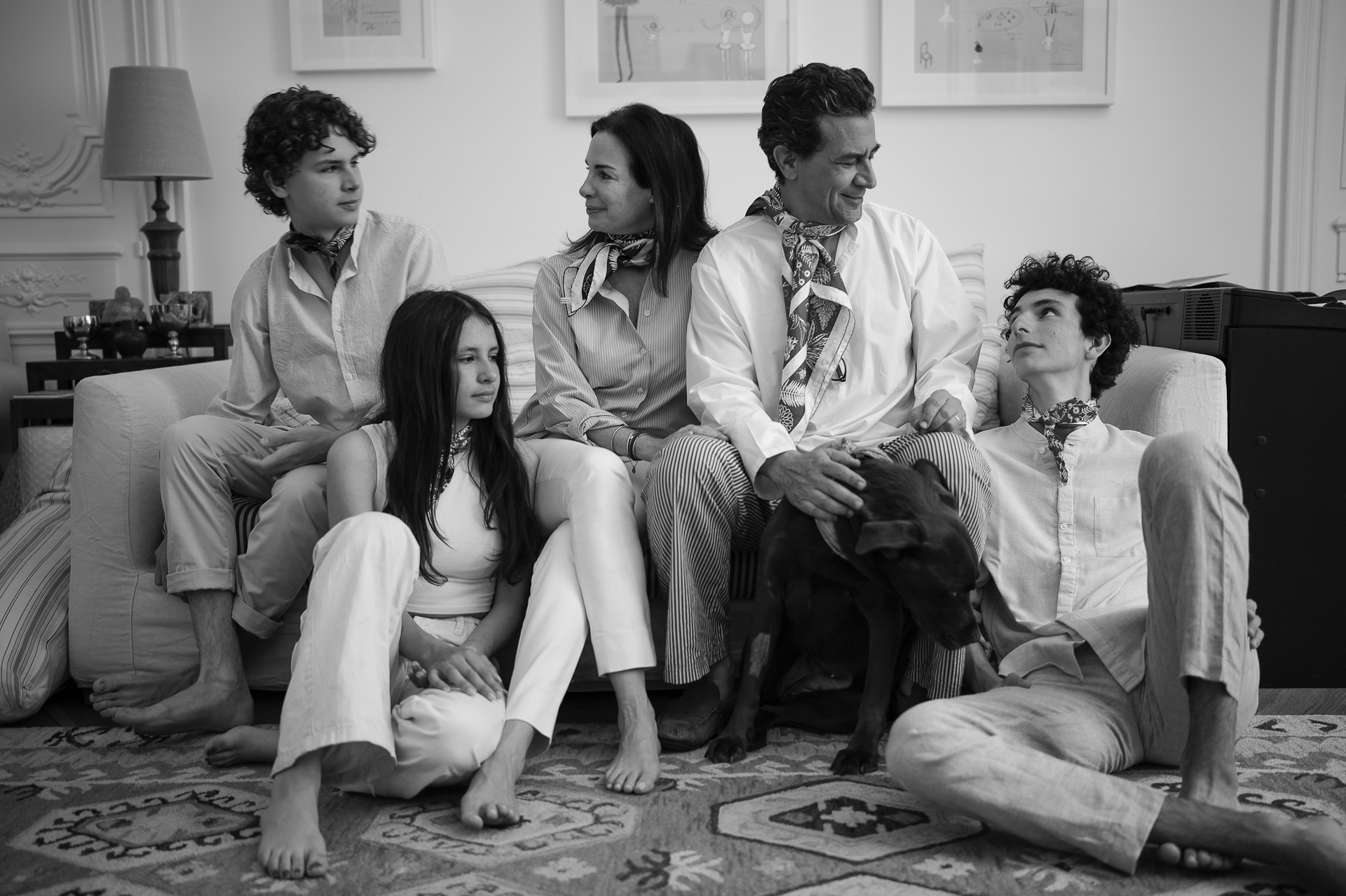
After completing another shooting of my designer friend’s new line of scarfs, this time with my favorite family in Paris as models, I knew that I was back craving for a M10-R, one that could unlock the full power of APO 35mm (and also its close-distance shooting ability!). So I was back on eBay and internet fora, searching for reasonable deals of used M10-R BP. (Yes, I still want the BP look!)
Black Panther — no, Black Paint — descends!
Fate would have it that I stumbled upon a thread on Leica Forum in August.
The orignal author heard rumors that M10-R BP was still in production. Other people on this thread later corrected him, saying that it was not that it was still in production, but rather Leica chose to release the 2,000 limited copies in small batches instead of all at once. One forum user suggested to register oneself on Leica on-line stores for notifications of M10-R BP should it become available. Never had any luck with this kind of notification for any hard-to-get item anywhere, but then again, the same with putting my name on the APO 35mm wait list, it didn’t hurt I figured. So I went on Leica France’s on-line store and registered for notification.
One week later an email from Leica France landed in my inbox while I was checking it, saying that M10-R BP was available, just like that. I didn’t hope for too much but still clicked on the link and put the (now available) M10-R BP into my shopping cart and went through the check-out process.
I was calm. After searching for a copy for so long I didn’t expect the order to go through (as I imagine other people also saw it and were trying to complete the order). Plus Leica France on-line store didn’t take American Express and my French debit card required the banker to call me to confirm such an expensive purchase (a real pain). I ended up doing the old-fashion bank transfer payment — verifying multiple times that the link and IBAN were genuine before I hit the transfer button. After that I sent an email to Leica France (according to their procedure) to tell them that the transfer was for my purchase of M10-R BP.
I heard nothing back after that. Sent a few more emails over but still nothing. I knew it was not a hoax as I verified multiple times the links and the IBAN. I thought that it’s just system error, that they actually didn’t have the stock, that they would apologize and refund me. Again, it didn’t hurt to try.
Then all of a sudden, a customer service email landed in my inbox. The staff apologized, saying that it’s summer vacation time (true!) in Germany and they were slow in the warehouses, but that’s it, my M10-R BP was on the way.
Really?
Yes, really. A few days later on a sunny afternoon, a brand new M10-R BP landed on my desk at the office, right before my late vacation to Puglia (yeh, again). And God it was every bit as beautiful as people claimed! It was so beautiful that I quickly decided that I would not buy M10 thumb support even though I’ve always had Thumbs Up on my M9 right from the beginning and relied heavily on it for shooting with Noctilux. I would train myself to shoot without the thumb support just to keep its pristine look. It is that beautiful!
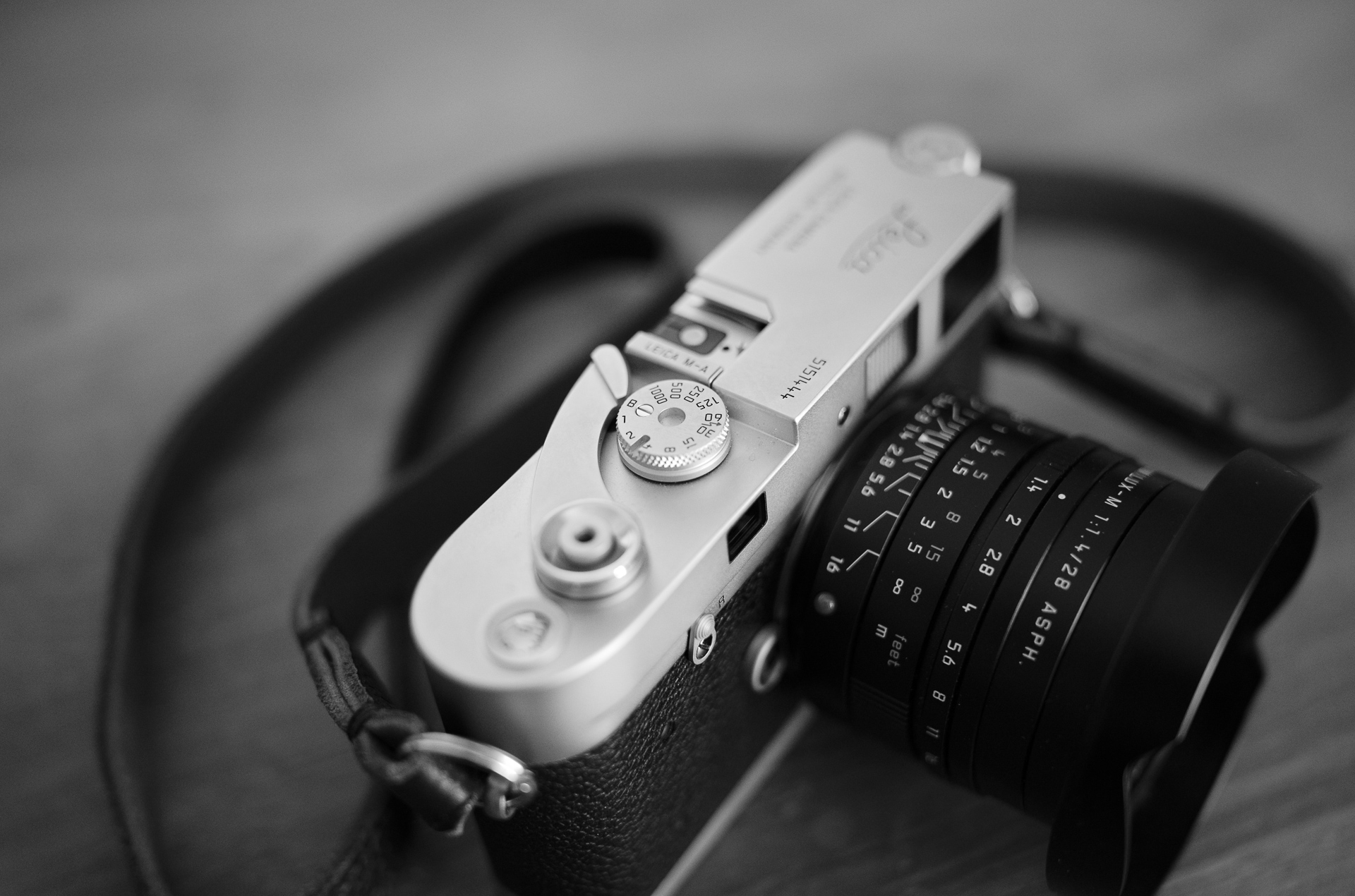
And I also immediately fell in love with shooting APO 35mm on M10-R BP for close distances via LiveView! Though far from qualifying as actual macro shots, with larger objects such as my M-A+Summilux combo (of course!), flowers or my Italian dishes the M10-R+APO combo does work wonder without a doubt! It’s a lot of fun to be able to simulate macro while retaining Leica characteristics. I immediately knew that there would be more and more future Leica lenses that come with close-distance focusing. (A few weeks later Leica did announce the new version of Summilux 35mm f/1.4 that could focus down to 40cm)
B&W and Color by M10-R
As with shooting with M9+Noctilux, I set my M10-R BP to saving B&W JPG and RAW files at the same time. Having been (and still am) a big fan of the in-camera B&W rendition of M9, I didn’t expect too much of the in-camera B&W of M10-R BP. And in the beginning I was indeed a bit underwhelmed as they lacked the punch of the M9 B&W that I’m used to. But over time I grew to like them in their own way. The M-A+Summilux “macro” photo above is a good example. The gradient was smooth, subtle yet prominent. No post-processing was needed. The JPG file whispered grace straight out of the camera.
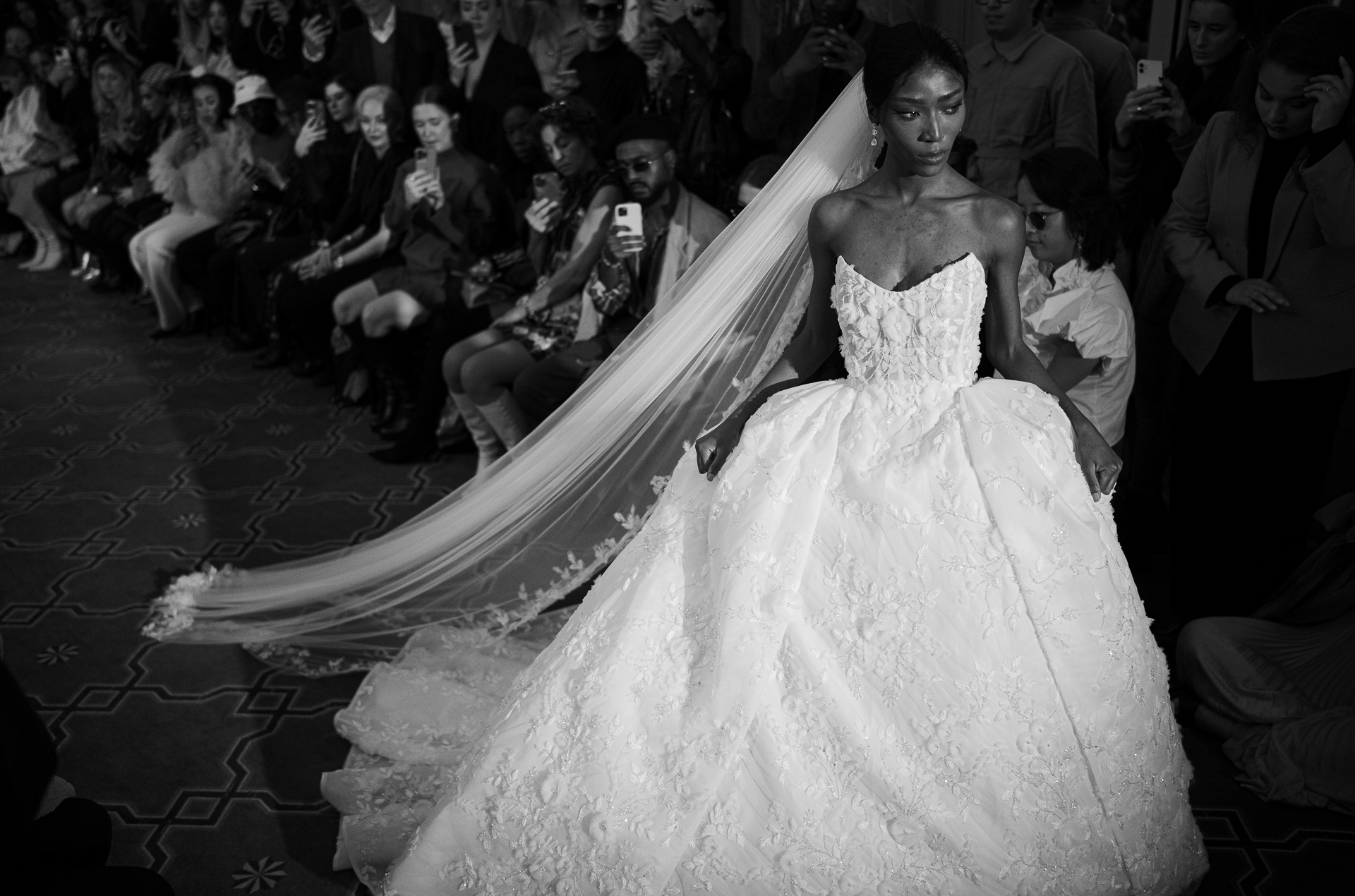
And given the right subject and context, they could definitely be as punchy and powerful as M9 B&W, such as the following photo from my shooting of Flying Solo‘s runway at Paris Fashion Week in September.
But obviously one of my original motivations to buy a new digital body was due to the “faulty” color (again, more on this later) of the 2018 CCD on my M9. So naturally I also spent quite some time figuring out the color of M10-R BP.
Note that when it comes to color photos, like most photographers, I do not rely on in-camera rendition but always work on RAW files in Lightroom. The only exception was probably those few years where I shot landscapes and cityscapes with Fujifilm X-T1 alongside Leica. I found the in-camera Velvia rending of Fujifilm X-T1 so good that I ended up shooting X-T1 exclusively with in-camera Velvia JPGs, not even storing the RAW files (as I had no interest spending time working on them)
And since it’s RAW files, the profiles one uses on Lightroom has an impact on the rendition even before any post-processing is applied.


The two files above were rendered in Lightroom with Adobe Color and M10-R RAW profiles, respectively. Anyone can tell that the Leica profile is more “colorful” (higher saturation) than Lightroom’s default profile. Below is another example.
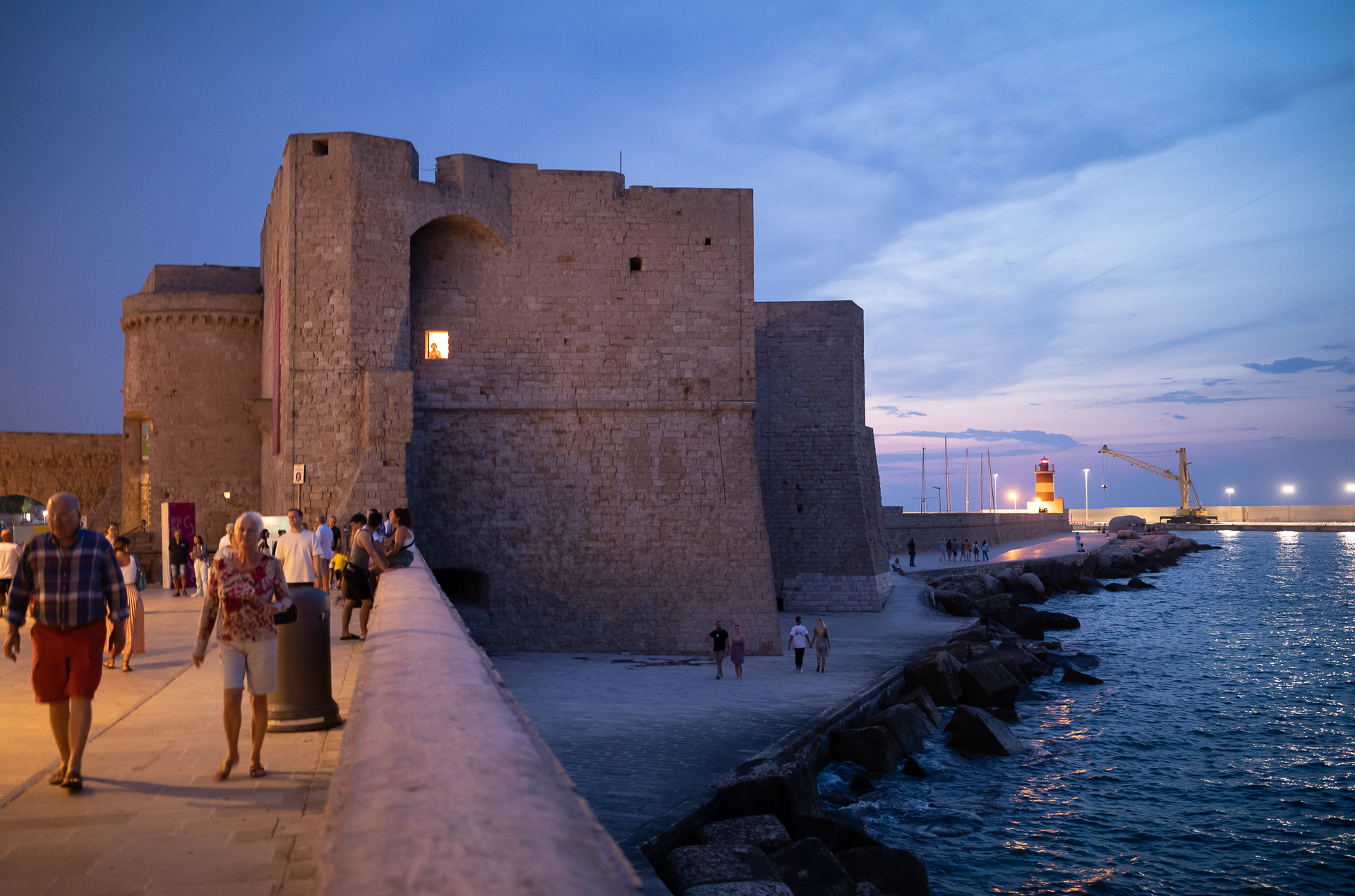
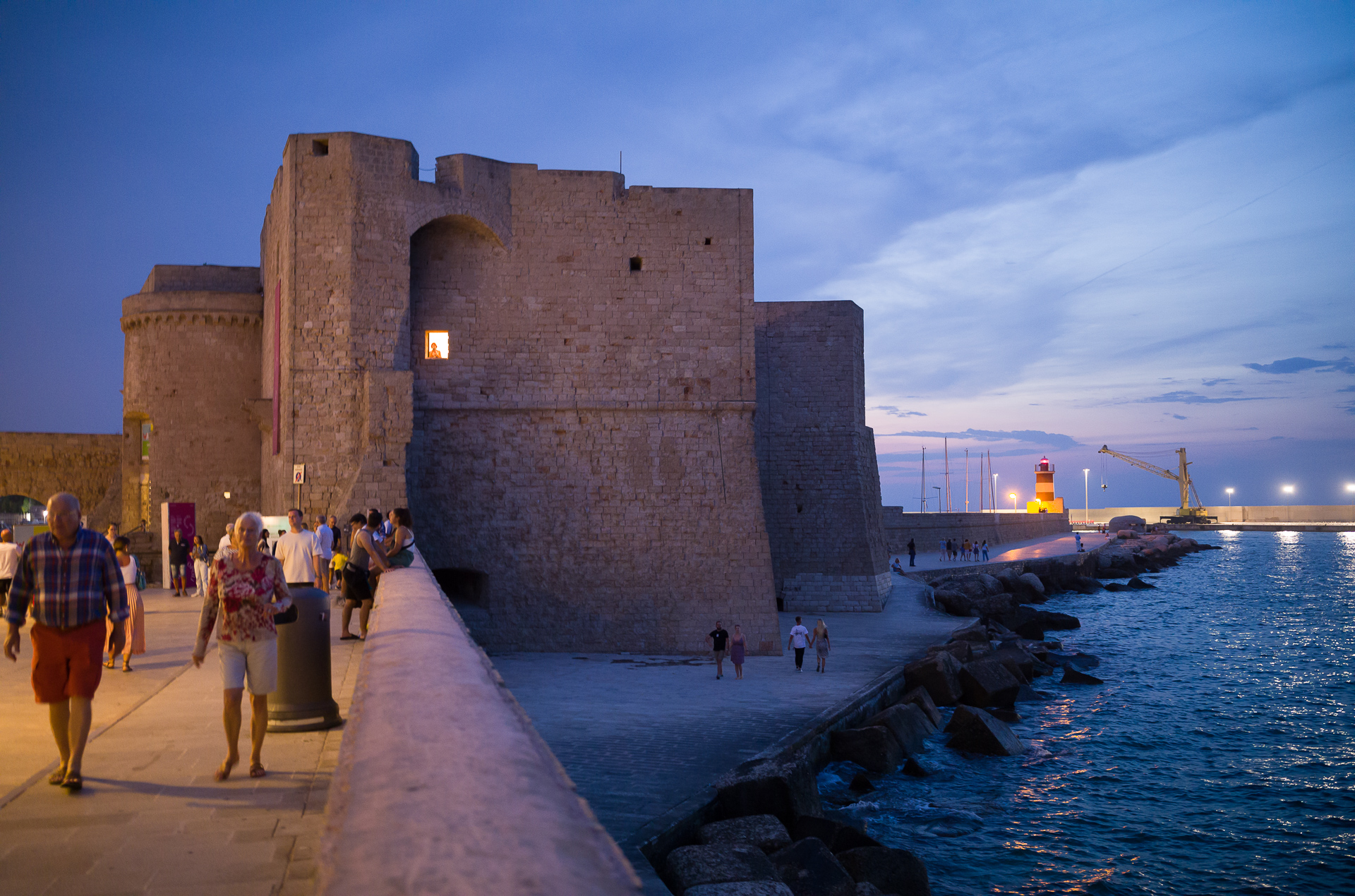
Most would probably prefer the ones rendered with LEICA’s own profile. But given that post-processing is inevitable for color photos, I am actually neutral on which one to start with. If anything, the Adobe Color ones have lower saturation and therefore serve as a better starting point for post-processing. But this very much depends on one’s color workflow.
So what is my verdict on the color photos producible by M10-R BP?
First I think most of the advantages people said about M10-R files are real. They have very smooth gradients so can withstand post-processing very elegantly. The highlights are very well handled (much better than the CCD on M9) and at base ISO of 100 it’s rare to have unrecoverable highlights even in broad daylights if a decent amount of care had been taken during shooting.
In terms of color accuracy, I’m no expert but these files of M10-R look very neutral to me. All three channels of R-G-B are quite well balanced (when white balance is set properly, either at shooting or in post-processing). M9’s CCD has a tendency to produce “screaming” reds. During those early years when I still cared about M9’s color exports, I often found myself dialing down the R channel if there were prominent red objects (such as traffic light or red neon lights) in the photos. With M10-R I have absolutely no issues with the channel balance.
What’s even more impressive is that even in extreme low lights that require high ISOs, if one nails the white balance, the color rendition could still be shockingly neutral.
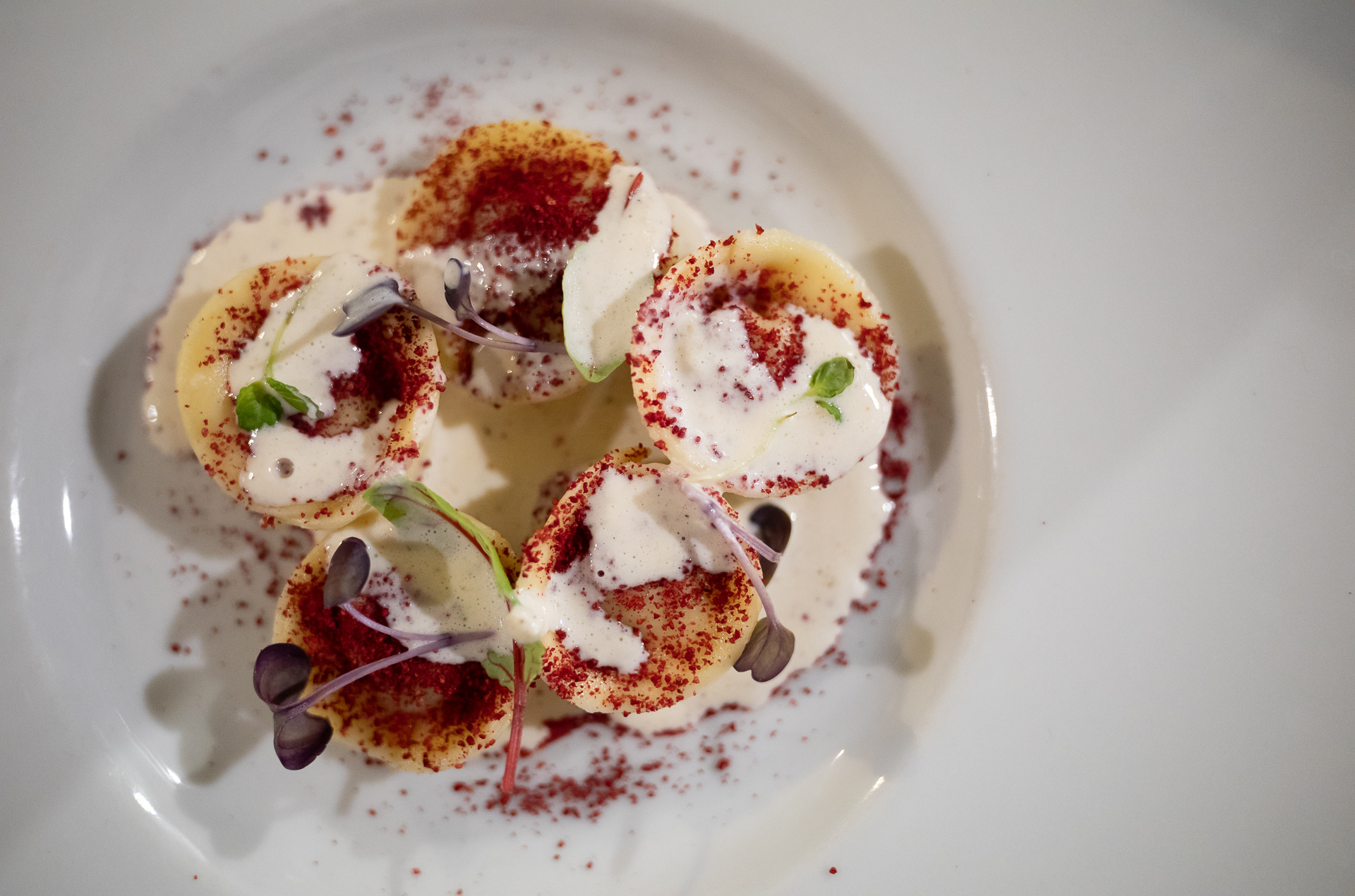
The photo above was taken at dinner during my vacation in Puglia at Masseria Panareo. The table was set in the terrace under really yellowish lights (and starry sky). It was so dim that I had to shoot at ISO 3200 even at f/2.0. I set the camera white balance to a grey card that I placed on the table next to the plates, then shot the entire dinner with the same WB and shutter speed (aperture always fixed at f/2.0). I was pleasantly surprised when I first loaded these RAW files into Lightroom, by how accurate already the colors were despite being at ISO 3200. The only post-processing I did to get to the photo above was increasing the exposure by half a stop.
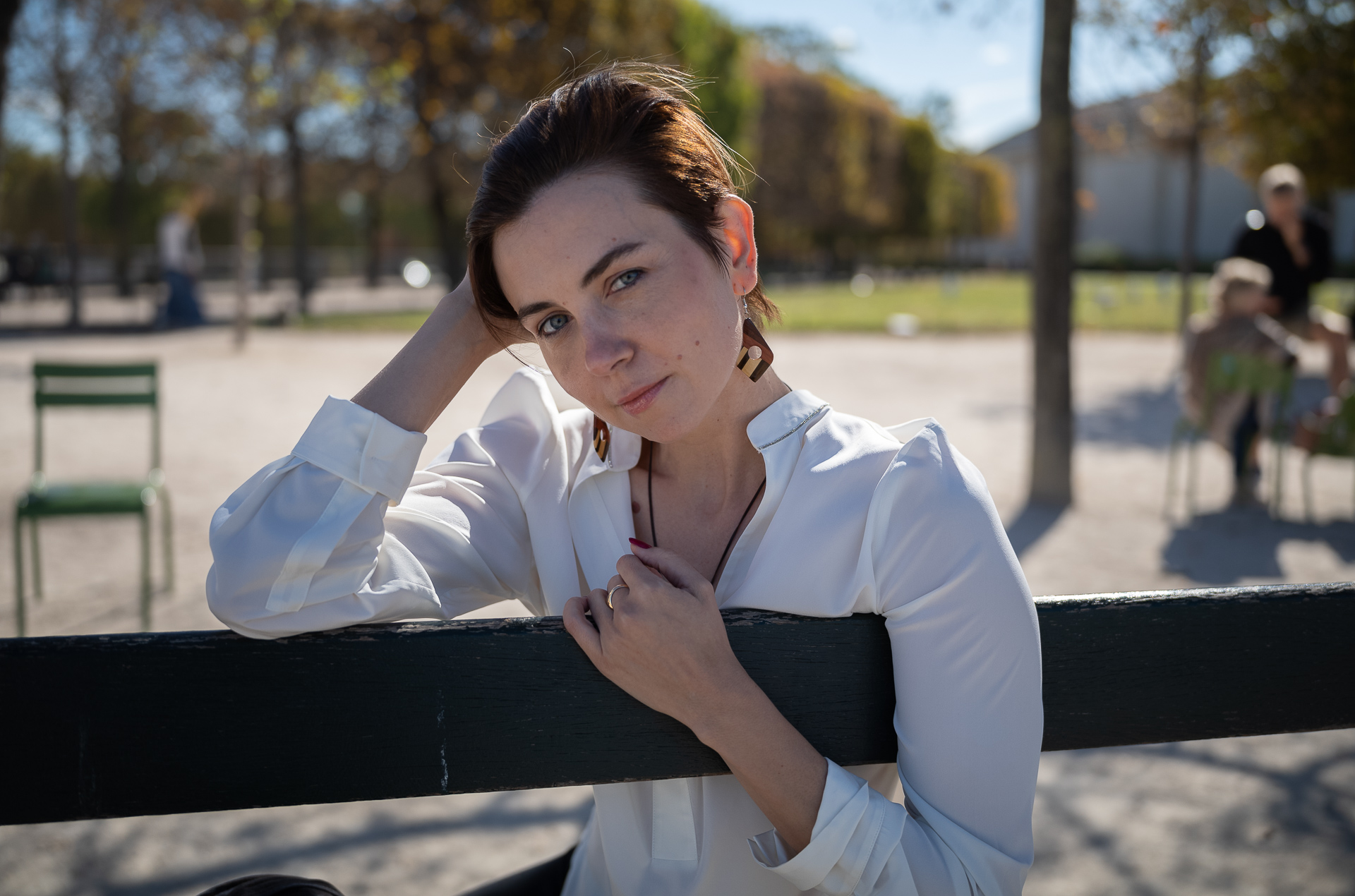

As for portraits, the neutral tone of M10-R files is definitely a big advantage over M9.
As can see in the 1st photo above, in broad daylights M10-R’s colors are as neutral and pleasing as they could be. Even if the skins are in the shadow, they still look natural and pleasing. Further post-processing could easily be done to make the skin tone even more appealing but I didn’t feel the need.
The 2nd photo was shot in twilight moments after sunset, against a distant Adriatic sea. Apparently more post-processing was done with this file to get to the final look, but I think anyone can agree that the skin tones and the environment in this shot are in harmony, as natural as they could be.
Long story short, after working on M10-R files for more than 2 months, I can confidently say that I won’t hesitate shooting fashions or products with M10-R. I’m confident that I could get to the colors and feelings I want every time with M10-R, across a broad range of lighting conditions, as long as I don’t screw up the exposure too badly. I am definitely really happy that I jumped the gun and acquired this beautiful beast in August.
And did I mention that the camera is just gorgeous?
3 bodies + 3 lenses = 3 combos
After trying a bit Noctilux on M10-R BP, focusing both via rangefinder and LiveView, I came to the conclusion that Noctilux is a much better match with my M9. The main reason is that as “sharp” as Noctilux is, it’s definitely not designed to resolve 40 mega pixels. (Some users tested and claimed that 24 MP is its limit) While I would never blow up M10-R files to 100% for usage, there’s also no point of keeping the gigantic files of the 40MP sensor if the Noctilux can’t resolve that much.
Another thing is my M9 has been perfectly calibrated to focus with Noctilux by the trustworthy technician at Photo Suffren. My M10-R BP out of the box, however, does not focus well with Noctilux via rangefinder. Of course I could send in M10-R to be calibrated for Noctilux, but my experiences 10 years ago trying to have M9 calibrated for multiple lenses including Noctilux weren’t very good. Usually you end up sacrificing somewhat for each of the lenses and none would focus perfectly. I also have no interest messing with the brand new rangefinder on my (gorgeous) M10-R BP, so Noctilux will stay on M9.
As the dust settled, I found myself working with 3 distinct combos that serve different purposes:
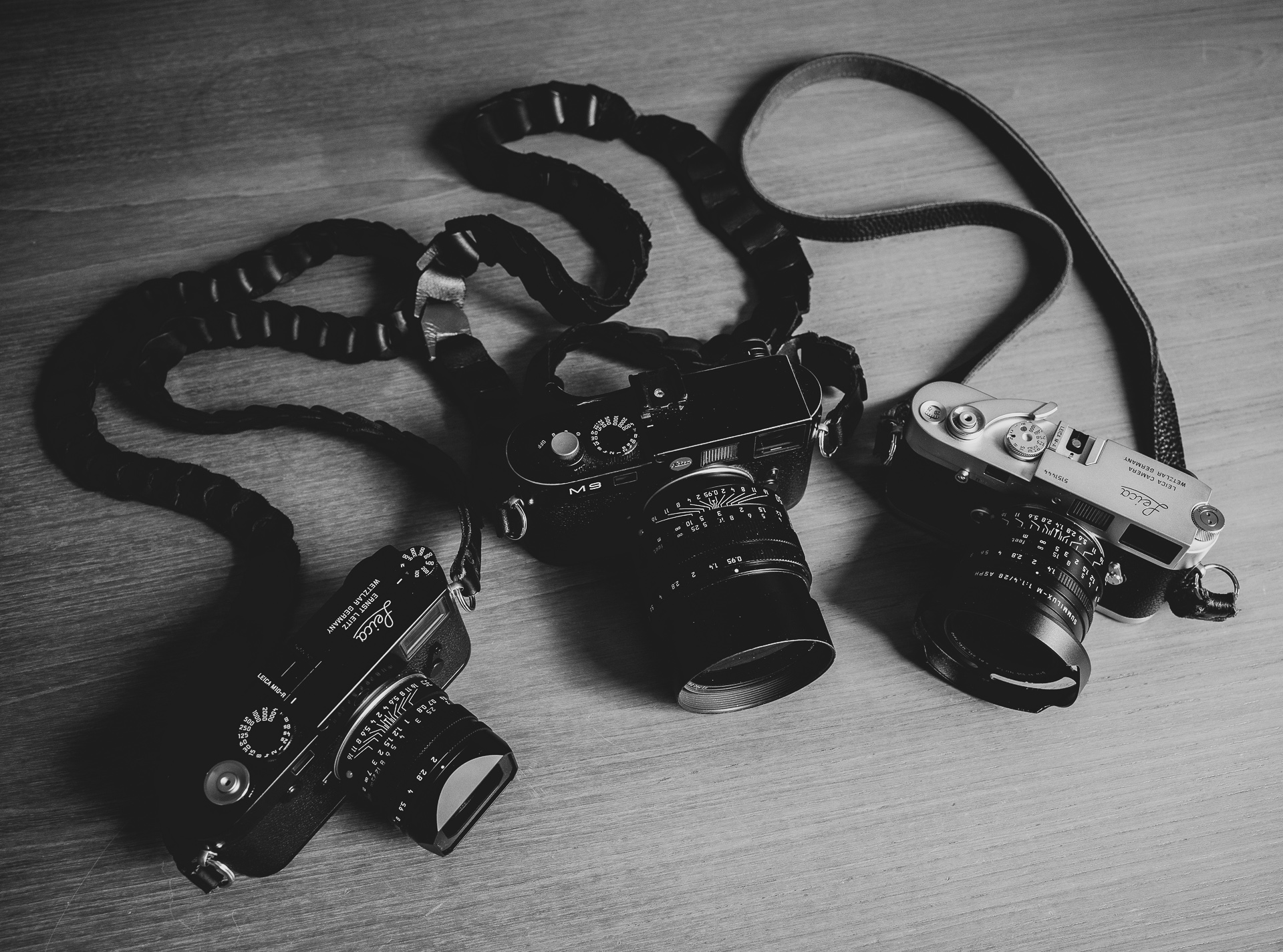
(1) M9 + Noctilux 50mm f/0.95 ASPH
This has always been and will always be my workhorse for street photography. As a matter of fact I just took it out for a whole day of shooting a week ago. It was every bit as amazing as it has been to my eyes, which had been spoiled by M10-R files over the previous 2 months.
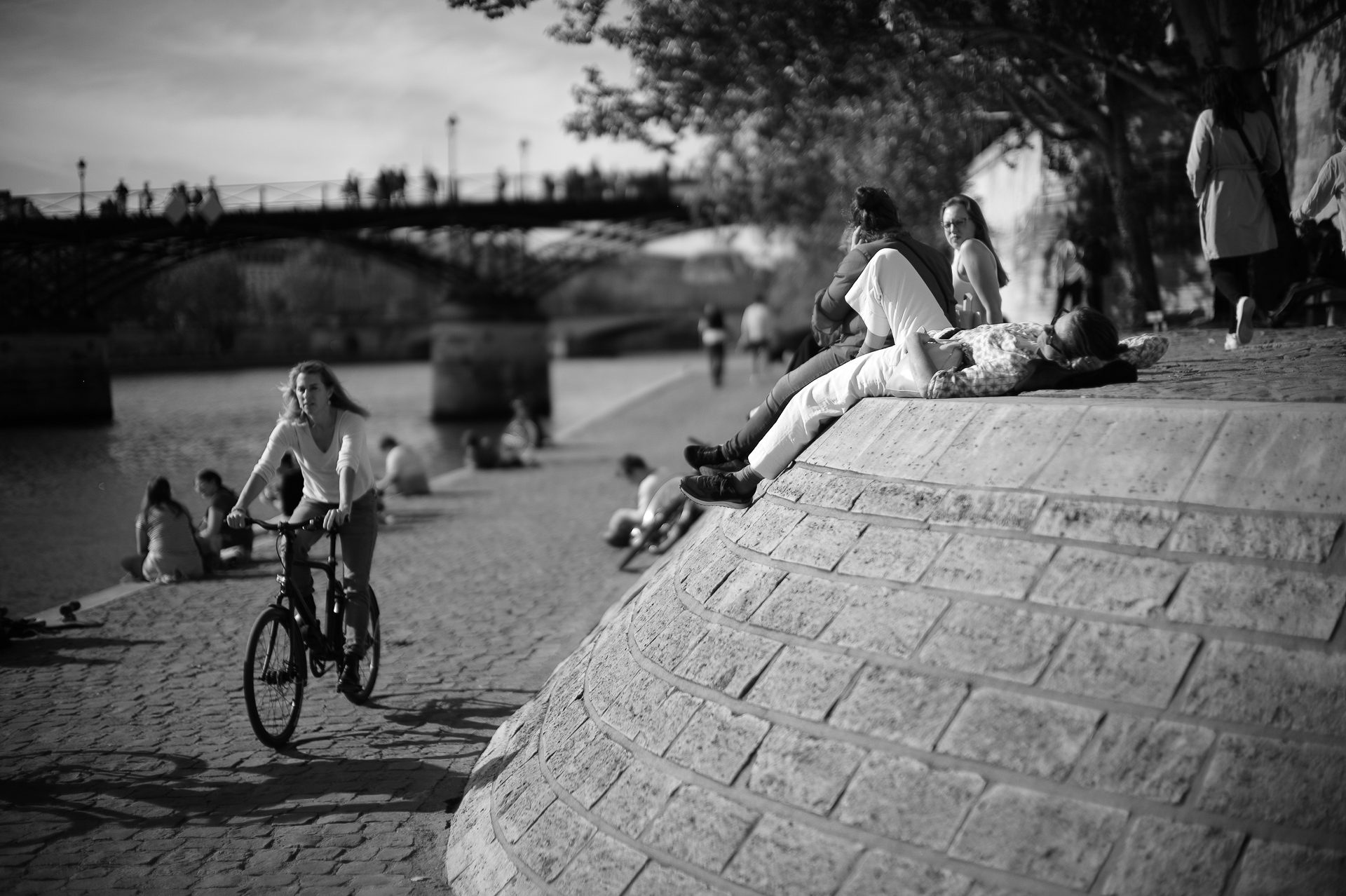
(2) M-A + Summilux 28mm f/1.4 ASPH
Oh how I love the Portra photos I took with this combo during vacations! Forget about 40MP, forget about gradients, forget about post-processing, Heck! forget even about metering (since M-A doesn’t have one)! Simple Sunny 16 rule gives me crazily pleasing results coming back from the lab every single time! Even those accidentally underexposed take a different life and bring back warm memories like no digital files could! This combo will be my vacation set, when all I want is to shoot and not worry about the photos until many weeks (or months!) later.

(3) M10-R + APO-Summicron 35mm f/2 ASPH
Having gotten used to shooting this combo and processing their files the past two months, I’m confident that this will be my all-terrain vehicle for the foreseeable future. Already I saw its potential while shooting runway at Paris Fashion Week in October, I look forward to shooting indoor candids, foods, general purpose travel photos as well as low-light photography with it. While the heavy M9+Noctilux combo is likely to stay in my Paris apartment for Paris street photography exclusively, M10-R+APO-35mm is definitely gonna be traveling with me around the world both for works and leisures.
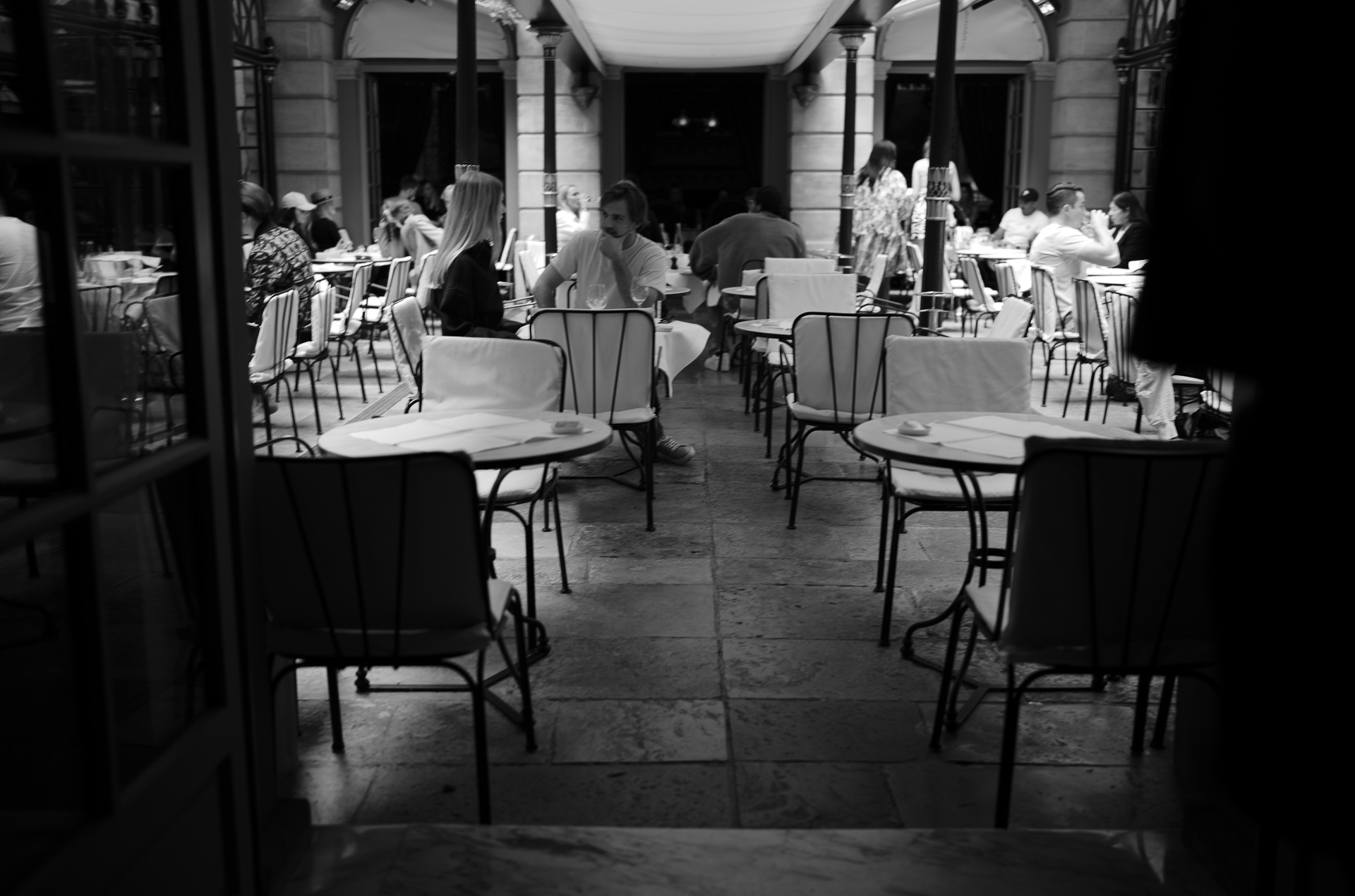
POSTSCRIPT: The mystery of the “faulty” color on the swapped CCD of my M9
Now, as I promised (a few times) in this article, we’ll come back to the “faulty” color of my M9 after its CCD was swapped in Tokyo in December 2018.
First for those who are not familiar with the (in-)famous CCD issue of M9, the first batch of M9 suffer from the so-called sensor corrosion issue. It didn’t seem to affect all production cameras but some of them started to exhibit sensor issues after a few years in usage. Leica openly addressed the issue in 2014, calling it “sensor corrosion”, and offered to replace the CCD sensor for free.
Remember that M9 was announced on September 9th, 2009, and started shipping later that year. By 2014 some cameras have been in use for 5 years. Mine was bought in 2010 by the original owner then sold to me in 2011. I did not bother to check which batch my M9 was but given the limited amount of production in the early years, safe to say that mine was most likely among the early batches and equally at risk of sensor corrosion as well, so I was obviously paying attention to all those discussions.
The sensor corrosion issue supposedly shows up as white spots in the photos that cannot be removed by a traditional cleaning of the sensor. Mine did not have that issue, so I never for once thought that my M9 was faulty as well.
My M9, however, had a different issue, almost from Day 1. Sometimes its shutter locked up after I pressed the shutter button. I had to turn off and then turn back on the camera to resolve that. And the recorded files when that happened were pitch black, so it appeared to me that the shutter did not open when this happened.
My “shutter” problem was kind of random. It showed up every now and then. While it probably cost me a few street shots but at least power cycling M9 usually solved the issue. M9 had a reputation of having a lot of issues (slow on-camera software, lock ups that require on/off cycling, etc) so I thought that it’s just one of those kinky things about M9. As I love the photos coming out of the camera so much, I just treated it as a nuisance.
Again, I never had the “white spot” thing so I never suspected that it was sensor corrosion.
Then the “shutter” issue got worse and worse over the years. Instead of one single lock-up, it started to behave like a rapid-fire machine gun — when I pressed, the shutter sounded like it’s going back and forth mechanically and rapidly, non-stop. I had to turn off the camera to stop it. Sometimes simply power-cycling M9 didn’t solve the problem. I had to remove the battery and put it back in to resolve it.

In December 2018 while I was in Tokyo on a biz trip, I went to take some photos of the new born baby of a good friend who lived in Nakameguro. After 3 or 4 shots, the shutter started “rapid-firing” again. I turned it off and back on. Dead. I turned it off, removed the bottom plate, took the battery out, put it back in, turned it back on. Still dead.
That’s when I realized my M9 was officially dead, after 7 years in my hands and 8 years into its life.
Since I still had about half a month of stay in Tokyo, including my winter break, I did not want to wait until I returned to Paris to get it repaired. I went to Leica Ginza, the famously snobbish Leica boutique in the heart of Tokyo. They listened to me describing the issues, politely (with a tint of snob) accepted the camera and told me they’d call me once they completed the diagnosis.
They called me the next day: it was the infamous corrosion issue and they had to swap the CCD sensor.
“What? Why? I didn’t have white spots on my photos? Mine was a shutter issue, no?”
“No, sir. It’s sensor corrosion. It just manifests itself in a different way. Would you like to get it swapped?”
By then Leica had long phased out the free CCD swapping program. I would have to pay out of pocket. The price they quoted was not bankrupting, but it definitely was difficult to stomach in the beginning (knowing that Japanese added a premium over Europe).
But loving M9 so much, I resolutely (though not happily) agreed to the quote on the phone. 10 days later, just before my X’mas break started, I went to pick up my M9, now with a new heart. M9 looked the same, but knowing that the CCD was new, I kind of felt that it’s different.
I shot through that winter break in Tokyo and Yokohama, produced some really nice photos, both in B&W and color. “Shutter” issue was gone. I was content. So everything seemed to be back on track.
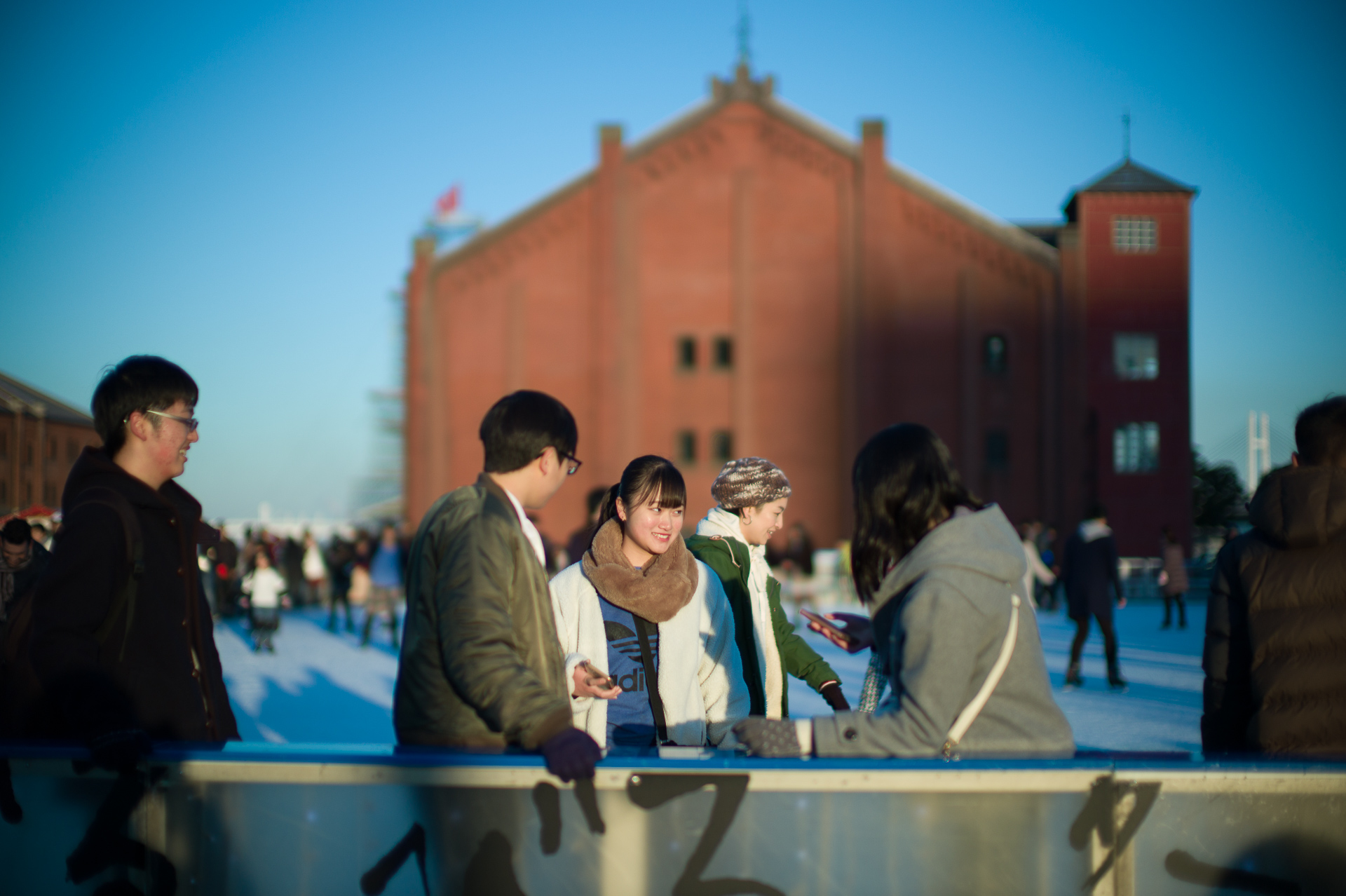
By then I was predominantly shooting only B&W with M9, but I did occasionally use the RAW file to generate color photos. It was around the summer of 2019 that I started to notice that my M9 colors were off. The photo below taken in Normandy in July 2019 is an example:
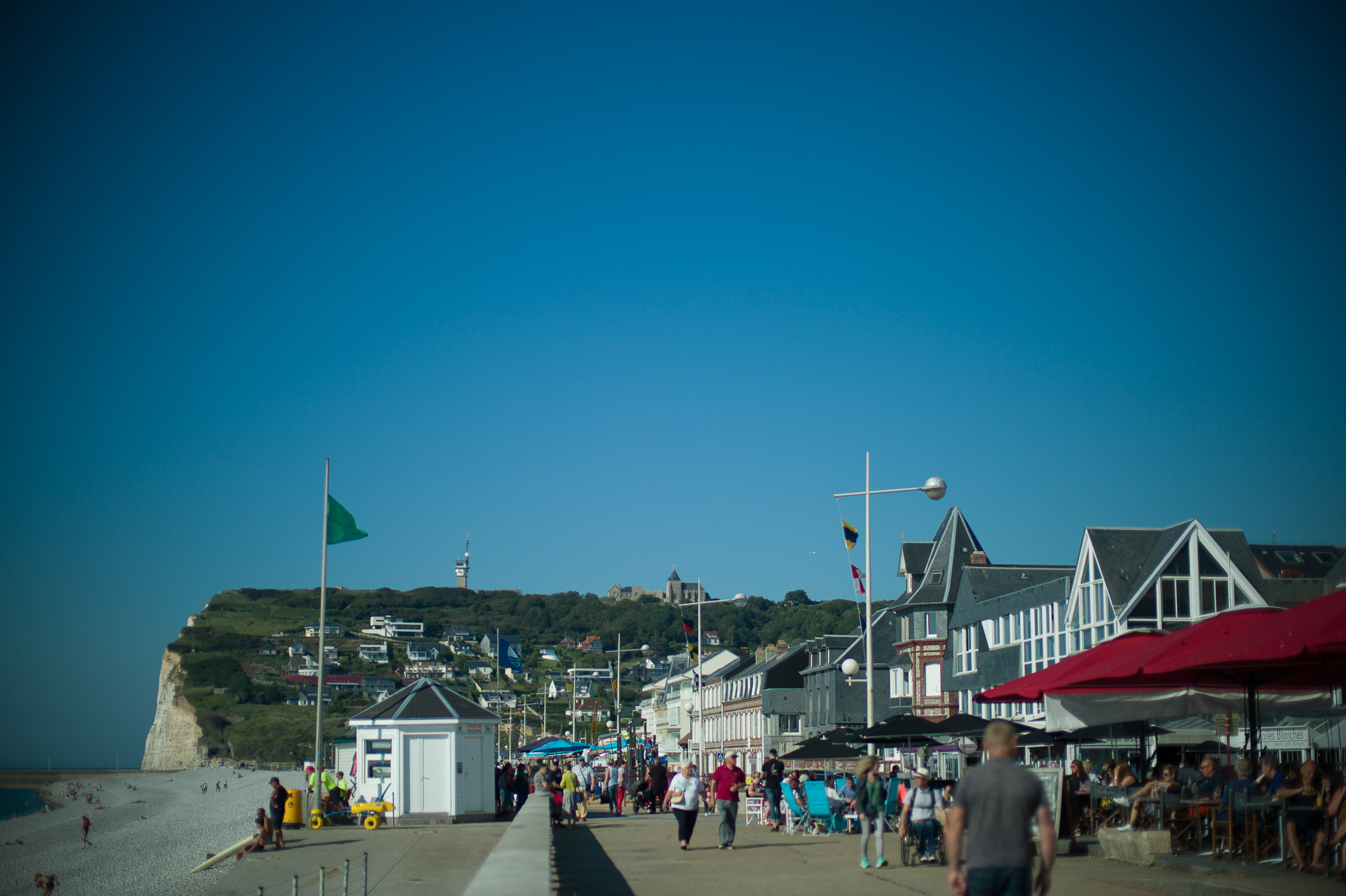
The photo was taken late afternoon on a sunny day with almost no cloud. White balance was set to Sunny. As one can see there’s a very weird tint of green across the entire photo. The blue sky looked greenish despite the fact that at a low-humidity country like France on a clear-sky day in summer, it should not have anything remotely close to green cast.
This amount of tint could be fixed in Lightroom if I wanted. But as I said at that time I was mostly shooting only B&W, I didn’t bother to fix. I casually searched on the internet and found a few M9 user reports that complained about the colors being “different” after the CCD was swapped following corrosion issues. A blogger also wrote a convincing piece claiming that Leica didn’t put the IR cut filter in the early batches, which led to the corrosion. Now they added it back so color is slightly different. Being so focused on B&W, I took it that that was the exact reason, that my new CCD was different. And since I almost only cared about B&W by then, I didn’t bother to do extra tests.
The greenish tint situation got worse and worse since. It got to the point where after I loaded photos (both RAW and JPG) into Lightroom, I would switch to a filtered view with only the JPG files, as the greenish RAWs in the browsing mode was an eyesore.
I continued to shoot M9+Noctilux through 2019, the pandemic years of 2020 and 2021, mostly using only B&W JPGs even though I kept all the RAW files. Then as I mentioned earlier in this article, I went to shoot the scarf lineups of my designer friend back in May this year. Since it’s a fashion product/model shoots, they would be in color and the colors had to be correct.
The first shooting was outdoor, on a sunny morning in Jardin du Luxembourg. I knew the M9 CCD colors would be off and I had to correct them in Lightroom anyway, so I just fixed the white balance to Sunny and shot away. Below are examples of default export from untouched RAW file and export from corrected one for example.
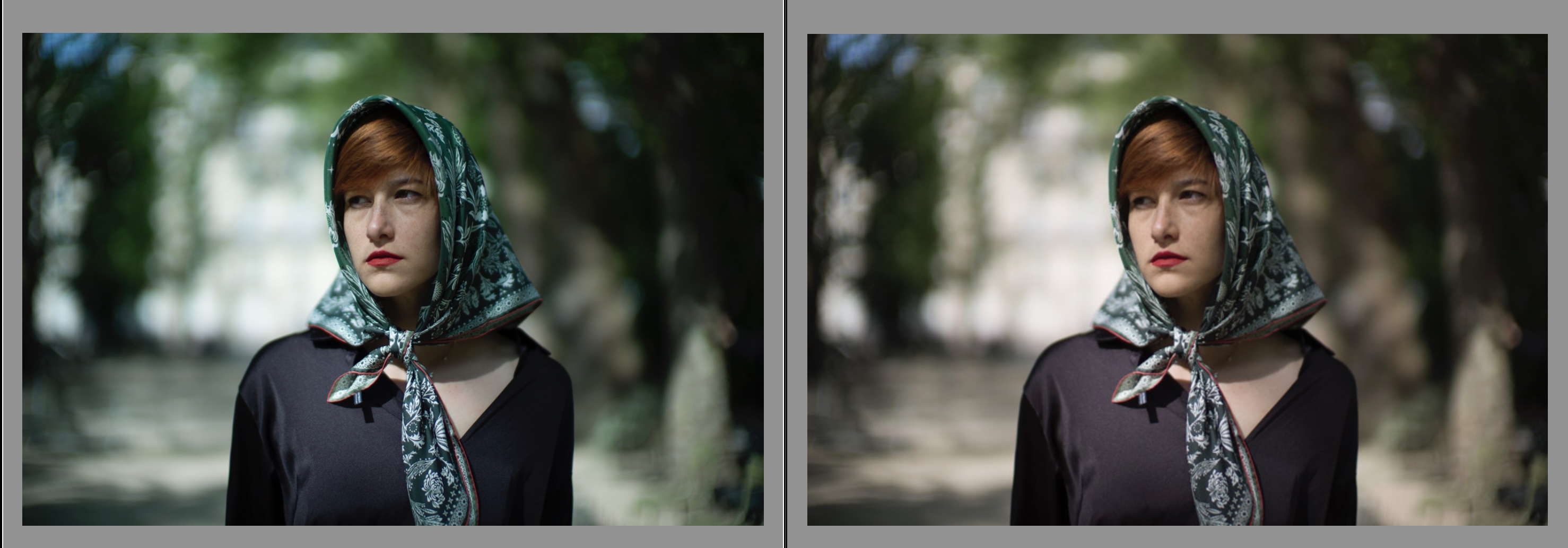
Even without the caption, anyone can tell that the photo on the left was tinted with green, while the one on the right looks much more natural — it should coz’ it took me darn good time to fix in Lightroom.
Convinced that it’s the problem of the swapped CCD, I started looking at getting a new digital M body as I mentioned earlier in this article, which eventually led to my landing on a rare brand new M10-R BP.
The road to the big revelation, however, began a month later, when we shot the same duo of models, but this time inside an apartment in Saint-Germain-des-Prés. Since it’s in-door with lights coming in from the Parisian windows, I removed the Leica 16x ND filter that was a fixture on my Noctilux for outdoor shots under daylights.
For those that never shot Leica M cameras, with a fast lens like Noctilux (f/0.95 or f/1.0) or Summilux (f/1.4), to shoot under daylights outdoors you almost always need to add ND filters. This is because Leica M cameras have mechanical shutters that max out at 1/4000s (M9 & M10-R) or 1/1000s (M-A). Without ND filter there’s no way to shoot Noctilux or Summilux wide-open outdoor in daylights. (And not shooting these lenses wide-open is blasphemy as they were designed to be optimal at wide-open.)
Since the available lights came through Parisian windows and there were furnitures of different colors in the rooms, I knew I had to be careful with white balance. I manually set white balance with my grey card before shooting, and reset it when I felt that the light condition had changed throughout the shooting.
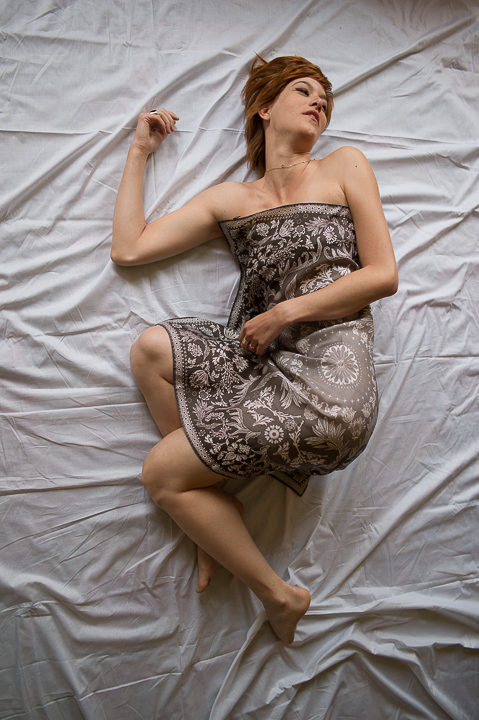
When I loaded the files into Lightroom later that day, I was so satisfied with the neutrality of the color that I sent a few photos via Facebook Messenger to a close group of photographer friends in Tokyo with texts proclaiming “M9 is still going strong!”
Looking back, I was an idiot not to see the obvious.
If the sensor was the issue, manually setting WB with grey card would not solve the greenish tint problem entirely since the RGB balance was already off. I would still have to correct all photos painstakingly in Lightroom. The fact that these indoor photos came out “correct” when loaded into Lightroom should have alarmed me of my big mistake.
But as it would end up being the case, I didn’t arrive at the revelation until 2 months later when I had a new digital body, my M10-R BP, and a new Summicron lens that didn’t require ND filter, APO-35mm, at hand and started testing with a few body-lens combination, that I realized how wrong I had been — for the previous 2.5 years.
It turned out that, it was never the CCD that was the issue! The $150 Leica ND 16x filter that worked very well over many years had deteriorated and was adding greenish tint to the photos!
Oh my God, what a stupid fact to figure out! I thought Leica only manufactured quality optical products so never in my life would I have questioned the $150 ND filter that carries its name!
The revelation came when I mounted my Noctilux with Leica ND 16x filter on my new M10-R BP, took a few shots, loaded the SD card on my Macbook Pro, imported into Lightroom and noticed immediately the infamous green tint on the 40MP RAW file.
Holy shit!
It was the ND filter that deteriorated! Not the CCD! I quickly removed the ND filter, stopped down the aperture and took a few test shots outdoors in daylights with my M9. The results were equally exhilarating as they were humiliating. Exhilarating because my M9 CCD turned out to be all fine and could continue to be a source of inspiration for color works. Humiliating because —
— Fuck!! Why didn’t I do some simple tests to figure this out back in 2019 when I first noticed the tint??????
Immediately I went on BHPhoto website to order a new (not Leica) B+W ND 32x filter — $90 vs $150! — and with the new ND filter, of course, the nightmare is gone. M9’s CCD color is back!
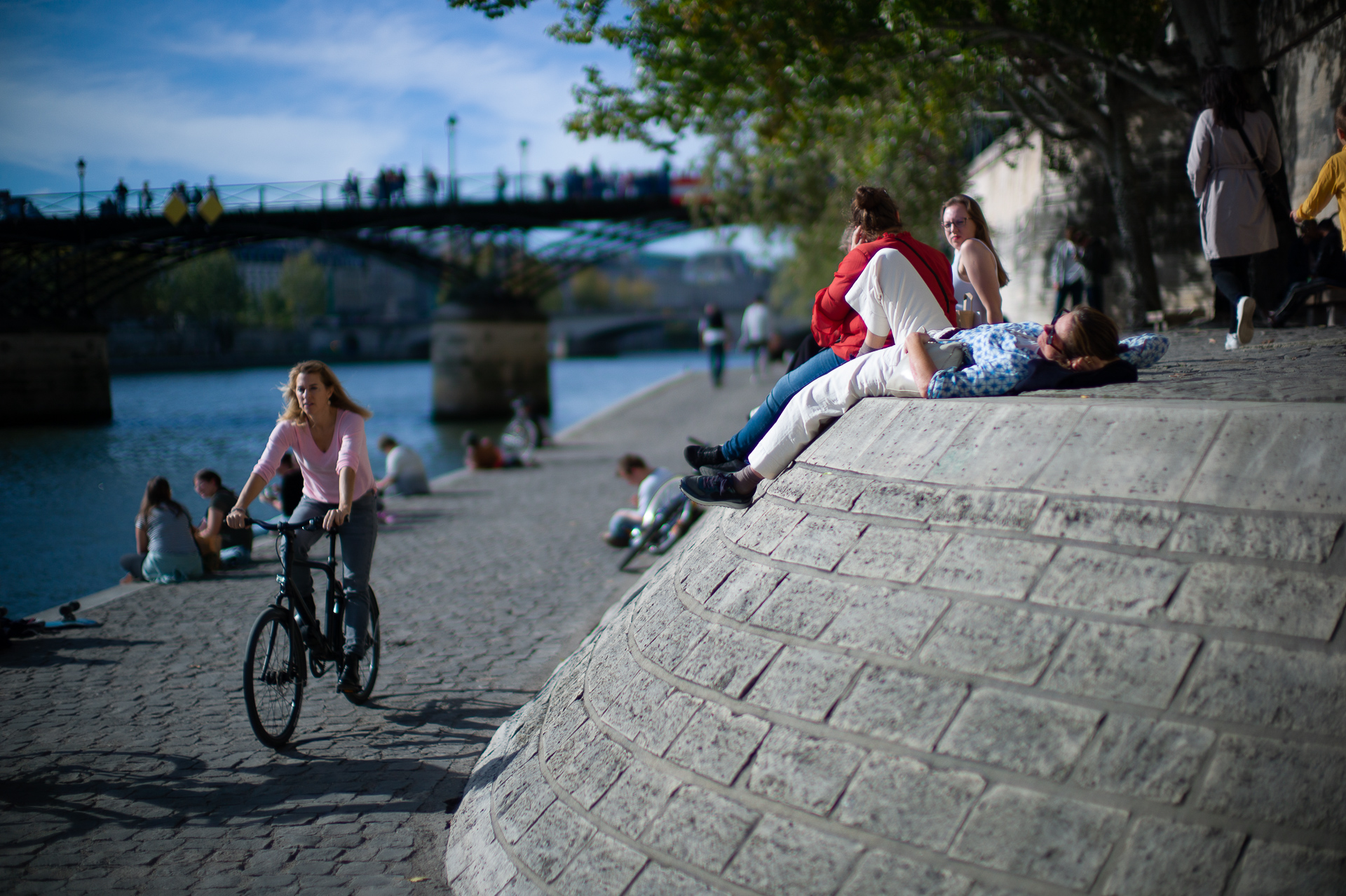
So this story does have a happy ending. Not only I acquired a new combo in 2022 (M10-R BP + APO-35mm) that I’am sure to enjoy shooting for many years to come, I also recovered my good old faithful M9+Noctilux combo at a mere cost of $90.
What can I say? Life with Leica is full of surprises and I would not imagine an alternative life without it!
But next time I have doubt about the Leica gears, I will definitely do a thorough test instead of just blindly trusting the company!
thanks for sharing this good story with beautiful pictures. The apo 35mm stand out, as do the Noctilux, of course. Glad it was just a dumb filter and not the M9!
Thanks Matias! Indeed filter is an easy fix! M9 will definitely stay with me until the end of world!
Thank you JM for sharing your experience so generously. Your camera lens pairings were inspiring and prompted thoughts of a chef choosing the right wine to accompany a fine meal. The episode of the ND filter is a valuable reminder that when facing a problem we should always start with the simplest solutions, How many valuable electrical items have ended up in landfill for want of replacing a fuse? I will look forward to following more of your Leica peregrinations.
Mark, thanks for the message. Sorry for the late reply as I’ve been traveling in Japan and Taiwan. The tale of the ND filter is a particularly ironic one. It would have taken a very simple test to figure it out. On the other hand, I think the blue-greenish tint might have contributed a bit to the addictive B&W look of my M9 with Noctilux during those years, a bit like color filters during B&W film days. I’ll find out whether that’s the case after I return to Paris in February and take more street photos with the new ND filter.